Liturgically Speaking: The Retirement of Alleluia in Lent
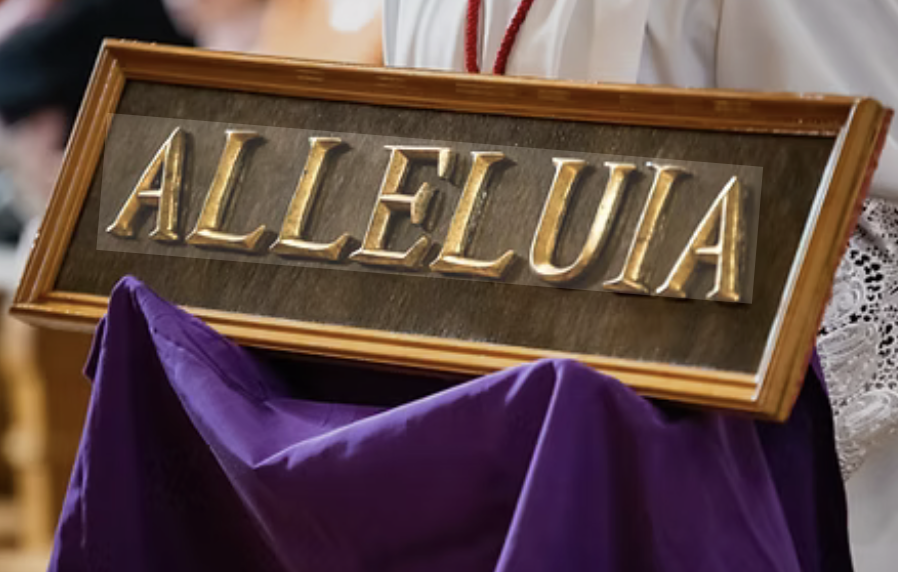
One of the most noticeable changes at the beginning of Lent is the sudden silence of a familiar word: Alleluia. For many worshipers, its absence feels striking, almost unsettling, and that is precisely the point.
Alleluia is a word of exuberant praise, rooted in the Hebrew hallelu Yah “praise the Lord.” In the Church’s liturgical life, it is closely associated with joy, celebration, and especially the resurrection. Because Lent is a season of penitence, self-examination, and preparation, the Church intentionally sets aside this word of unrestrained praise. We do not lose it; rather, we fast from it.
This “retirement” is not about dourness or deprivation for its own sake. Instead, it sharpens our spiritual focus. By withholding Alleluia, the Church invites us to dwell more honestly with repentance, mortality, and our need for God’s mercy. The restraint of language mirrors the restraint of the season: simpler music, fewer ornamentations, and a heightened attentiveness to scripture and prayer.
A similar principle lies behind the custom of forgoing the organ voluntary during Lent. Traditionally, the organ, especially in its fuller, more expansive use, has been associated with festivity, proclamation, and musical abundance. In Lent, the Church often chooses silence at the conclusion of the liturgy, allowing the spoken dismissal to stand on its own without musical commentary. This silence is not emptiness; it is intentional space for reflection, inviting worshipers to carry the weight of the liturgy with them rather than being lifted immediately by triumphant sound. Just as the absence of Alleluia heightens our awareness of the season, the absence of the voluntary underscores Lent’s call to inwardness, restraint, and contemplation.
Importantly, this silence also deepens what comes later. When the organ resounds again at Easter, often with brilliance and fullness, the sound itself proclaims resurrection. The contrast teaches us that joy, like sound, is most powerful when it has been patiently awaited.
Thus, both the silence of Alleluia and the absence of the organ voluntary during Lent are forms of proclamation. They teach us that Christian joy is not constant noise, but something that can wait, mature, and finally burst forth at just the right moment.
With hopes for a blessed Lent,
Dr. Jason, director of music