From the Organ Bench: A Glimpse Into the Ministry of Sacred Music
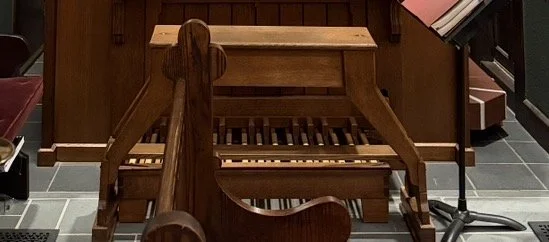
One of the great joys of serving in the Church is the privilege of offering music that helps shape our worship. Many people encounter church music only in the hour we gather on Sunday, but behind those moments lies a world of study, discipline, and prayerful preparation that forms the foundation of what we do.
For most professional church musicians, the journey begins long before formally entering ministry. Ours is a field in which years of mastery are built through advanced study, undergraduate and graduate degrees, private instruction, and continual professional development. For decades we are trained that accuracy matters: wrong notes, incorrect rhythms, and unpreparedness are not simply imperfections, but barriers to beauty, clarity, and cohesion. Music becomes a craft formed by attention to detail and a deep respect for the art itself.
Increasingly within the Episcopal Church and across liturgical traditions, church musicians are also pursuing formal theological education alongside musical training. Many now hold Master of Divinity degrees, Master of Arts degrees in Theology, graduate certificates in Theology and the Arts, and advanced diplomas in liturgical theology. This reflects a growing recognition that sacred music is not ancillary to worship, but an essential theological and pastoral ministry. My own formation includes graduate study and a diploma in Liturgical Theology from the University of Notre Dame, widely regarded as the foremost center for liturgical theology in the world, training that shapes how music is chosen, prepared, and offered in service of the Church’s prayer.
This discipline continues week after week. Every Sunday’s prelude, anthem, and postlude grows out of hours of score study, repertoire practice, rehearsal planning, and thoughtful preparation. Choir members, though they serve as volunteers, invest significant time as well, attending rehearsals, learning increasingly complex music, and refining their voices so that they may contribute something beautiful and unified.
What many may not realize is that sacred music is also deeply theological work. The hymns we sing, the choral anthems we offer, and the organ music that frames our worship arise from centuries of liturgical tradition and biblical reflection. Church musicians are trained not only in performance, but in liturgy, scripture, history, and the pastoral role that music plays in the spiritual life of a congregation. Each piece is chosen with intention, matching the liturgical season and the readings of the lectionary.
Because of this, the prelude on Sunday morning is not “background music.” It is the first thing we hear as we enter a holy space, inviting us to center our hearts and prepare for worship. Likewise, the choir’s anthem is not a performance, but a musical offering at the very apex of the liturgy, a moment in which text and music work together to illuminate the Gospel. And when the organ sounds in the postlude, it is not meant as a concert finale, but as a musical sending, encouraging us to carry the hope of the liturgy into the week ahead.
Church musicians also serve in a role that is sometimes misunderstood. Because our work is expressed through sound rather than spoken word, it can appear secondary to the ministry of clergy. Yet the Church has always understood music to be a vital part of its proclamation. From ancient chant to modern hymnody, music has carried theology, strengthened prayer, and united God’s people in ways words alone cannot.
My hope in sharing this is simple: to deepen appreciation for the musical offerings of our congregation and for those who prepare them. Every note sung, every note played, every hour of rehearsal is an act of service, offered not for recognition, but for the glory of God and the nourishment of the people of God.
Thank you for allowing us the privilege of making music with and for you in this sacred space we call St. Matthew’s.
Dr. Jason
Director of Music